
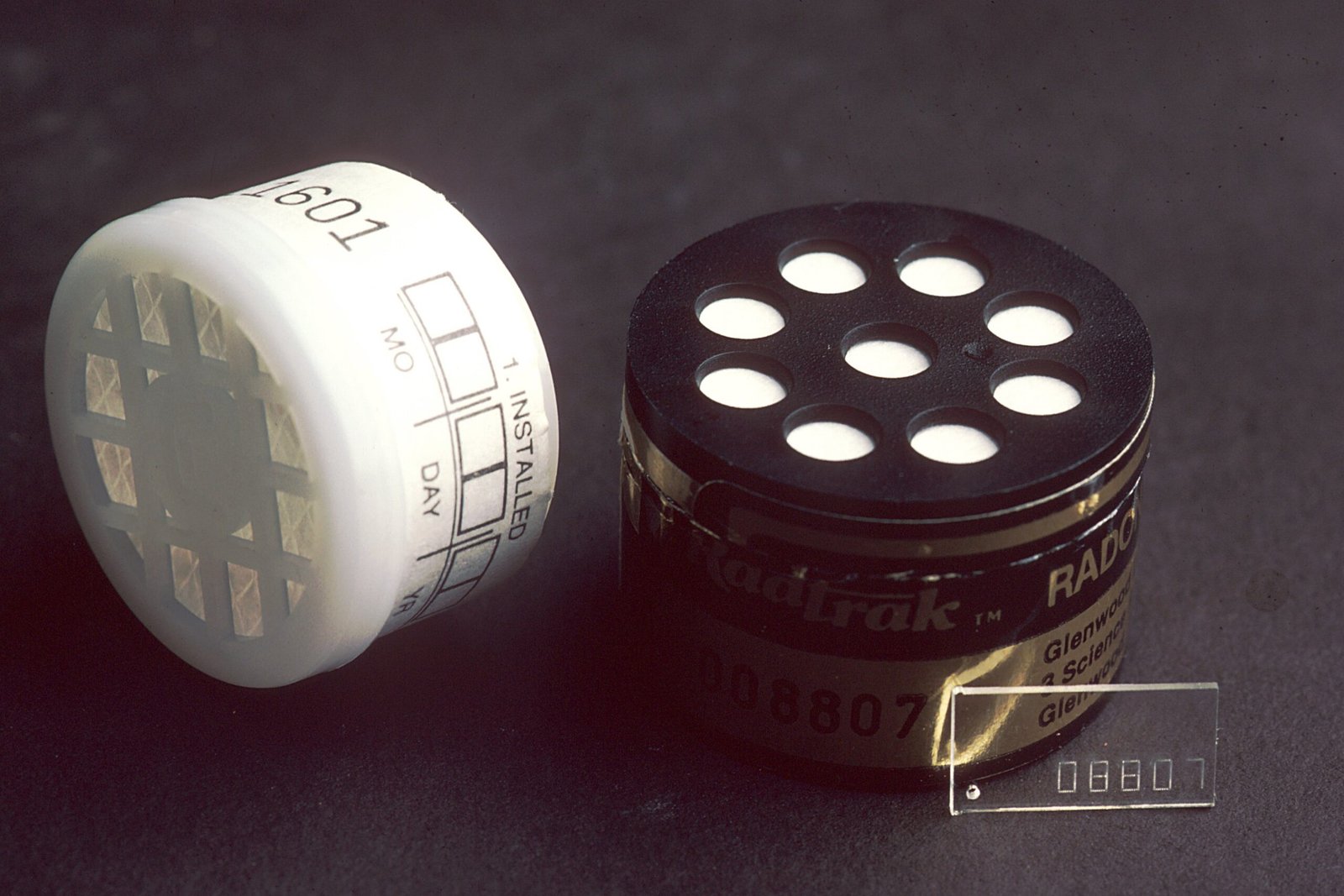
Radon is the one home problem you can’t see, smell, or spot at a showing. Here’s what the numbers look like around Omaha, how to test this winter, and where it shows up when you buy or sell.
I’m Lacory Gordon, a REALTOR with Revel Realty serving Douglas, Sarpy, Washington, and Cass counties. Radon comes up in a lot of my deals, usually during the inspection period. Everything below comes from Nebraska DHHS, the EPA, the Sarpy/Cass Health Department, and the Nebraska Real Estate Commission, checked Nov. 3, 2026.
Key takeaways
- Average radon test results run from 3.9 pCi/L in Douglas County to 7.5 in Cass County (DHHS, 2018 to 2023 data).
- The EPA says fix your home at 4 pCi/L or higher, and consider it between 2 and 4.
- Winter is an easy time for a short-term test because the house is already closed up.
- Sarpy and Cass County residents can pick up a free short-term kit while supplies last.
- You can test your own home without a license. Testing a rental or any other property takes a DHHS-licensed tester.
- Nebraska sellers disclose what they know about radon, but they don’t have to test.
What radon is and why it matters
Radon is a natural radioactive gas that comes up from the soil. You can’t see it, smell it, or taste it. It gets into houses through cracks and gaps in the foundation and builds up most in basements and lower levels.
The EPA estimates radon causes about 21,000 lung cancer deaths in the U.S. every year, about 2,900 of them in people who never smoked. It is the leading cause of lung cancer among non-smokers. Smokers living with high radon face a much higher risk.
Radon levels around Omaha
Nebraska DHHS reports the average pre-mitigation radon result for every county to the Legislature. The most recent county report, which matches the state’s radon data page, covers tests from Oct. 1, 2018 to Sept. 30, 2023:
- Douglas County: 21,089 tests, average 3.9 pCi/L.
- Sarpy County: 6,605 tests, average 4.8 pCi/L.
- Washington County: 590 tests, average 6.8 pCi/L.
- Cass County: 750 tests, average 7.5 pCi/L.
All four are above the 2.7 pCi/L level that state law asks DHHS to flag. And the state radon program says more than half of radon tests in Nebraska come back above the 4.0 pCi/L action level.
Here’s the thing I tell clients, though. A county average doesn’t tell you anything about one house. DHHS says homes with high radon turned up in every county that had test results. Two houses on the same street can test completely differently.
Why winter is a good time to test
A short-term test needs a closed house. The EPA’s Citizen’s Guide to Radon says to keep windows and outside doors closed as much as possible during the test, and for at least 12 hours before a 2 or 3 day test. In an Omaha winter, your house is already closed up, so there’s nothing to plan around.
If you want the most accurate picture, DHHS says long-term tests (3 months to a year) give a better average because they account for seasonal changes. Short-term tests (2 to 7 days) are the quick, cheap first look.
How to test your own home
DHHS and the EPA give the same basic steps:
- Get a kit. DHHS lists short-term charcoal kits at about $10 to $25 and long-term alpha track kits at about $20 to $30.
- Put it in the lowest lived-in level of the home, like a finished basement bedroom or family room. Skip the kitchen, bathroom, laundry room, and utility room.
- Set it at least 20 inches off the floor, away from drafts, high heat, high humidity, and exterior walls.
- Keep windows and outside doors shut and limit trips in and out. Your furnace fan is fine. Fans that pull in outside air are not.
- Leave it for the full time on the package, then mail it to the lab right away.
The EPA says if a short-term result is 4 pCi/L or higher, follow up with either a long-term test or a second short-term test before you decide to fix. If the first result is more than twice that, test again right away.
Where to get a kit in the metro
- Sarpy and Cass counties: Sarpy/Cass Health Department gives free short-term kits to residents while supplies last. Pick one up at 701 Olson Drive, Suite 101, Papillion (Monday to Friday, 9 a.m. to 3 p.m.) or 201 Main Street, Louisville (Tuesday to Thursday, 9 a.m. to 3 p.m.). Call (402) 339-4334 for details.
- Douglas and Washington counties: DHHS says some local programs hand out free or discounted kits, so it’s worth a call to your local health department to ask. Kits are also sold at hardware stores and home centers.
- By mail: DHHS lists kit labs including AccuStar, Air Chek, Alpha Energy Laboratories, and RSSI Laboratories. It doesn’t endorse one over another.
Questions go to the Nebraska Radon Program at (888) 242-1100.
Landlords: the license rule
This one surprises people. DHHS says Nebraska lets you test the home you live in without a license, but any other property has to be tested by someone DHHS licenses. Owning the property doesn’t exempt you. So if you own a rental, hire a business from the state’s licensed measurement list.
Radon when you buy or sell
Nebraska sellers fill out the state’s Seller Property Condition Disclosure Statement. It asks whether radon gas has been on the property, asks for copies of any test results, and asks whether the home has been mitigated and when. Under Neb. Rev. Stat. 76-2,120 the form covers what the seller knows, and a seller can mark that they don’t know. So a clean-looking disclosure doesn’t mean the house was ever tested.
Buyers: ask for past results and any mitigation paperwork, and think about a radon test during your inspection period. The EPA’s Home Buyer’s and Seller’s Guide to Radon lists three short-term options that work in a sale: two passive tests side by side for at least 48 hours, two back-to-back tests in the same spot, or a continuous monitor for at least 48 hours. A real estate test should include steps to prevent or detect tampering. The guide also suggests the contract spell out who tests, where, when, and who pays if the home needs a system.
Sellers: the EPA says it’s better to fix a radon problem before you list, because you have more time to deal with it. If you’re thinking about selling this spring, testing this winter gives you that time. My holiday selling guide and as-is selling guide cover the rest of the prep.
New construction: Nebraska’s Radon Resistant New Construction law, in effect since Sept. 1, 2019, requires a passive radon system in new homes where local codes adopt the state building code. The EPA still says every new home should be tested after you move in, and a fan can be added to the passive system if levels are high.
If your number comes back high
Don’t panic. The EPA says some radon reduction systems cut levels by up to 99 percent, and most homes can be fixed for about the same cost as other common home repairs. Get estimates from one or more contractors.
In Nebraska, anyone doing radon mitigation for the public has to be licensed. DHHS keeps a list of licensed mitigation businesses. After the system goes in, the EPA recommends a follow-up test, ideally by an independent tester. Your result also goes on the disclosure form whenever you sell, along with the mitigation date.
Buying this winter? My winter buying guide covers what else to watch for, and my closing costs breakdown helps you budget for inspections and testing.
FAQ
Is radon a problem in Omaha?
It can be. Nebraska DHHS data for Oct. 1, 2018 to Sept. 30, 2023 shows an average pre-mitigation test result of 3.9 pCi/L in Douglas County, 4.8 in Sarpy, 6.8 in Washington, and 7.5 in Cass. Every one of those is above the 2.7 pCi/L line the state report flags. Only a test tells you your own home’s number.
What radon level is considered high?
The EPA recommends fixing your home if radon is 4 pCi/L or higher, and says to consider fixing it between 2 and 4 pCi/L. The EPA also says no level of radon is completely safe.
Where can I get a free radon test kit near Omaha?
Sarpy/Cass Health Department offers free short-term kits to Sarpy and Cass County residents while supplies last, at its Papillion and Louisville offices. Call (402) 339-4334 for details. Douglas and Washington County residents can ask their local health department, buy a kit at a hardware store, or order from a lab DHHS lists.
How much does a radon test kit cost?
Nebraska DHHS lists short-term charcoal kits at about $10 to $25 and long-term alpha track kits at about $20 to $30.
Do Nebraska sellers have to test for radon?
No. The state disclosure form asks whether radon gas has been on the property and whether the home has been mitigated, and sellers must share test results they have. A seller who never tested can answer that they do not know.
Can I test a home I don’t live in?
Not yourself. DHHS says you can test the home you live in without a license, but testing any other property, including a rental you own, has to be done by someone DHHS licenses.
General information only, not medical or legal advice. Programs, kit supplies, and prices can change, so confirm with DHHS or your county health department. Checked Nov. 3, 2026.
Buying or selling in the Omaha metro?
I can help you plan inspections, radon testing, and repairs so nothing surprises you at closing, anywhere in Douglas, Sarpy, Washington, or Cass County. Call or text 402-297-6625 or email lacoryg@revelne.com. You can also reach me on my contact page.
Lacory Gordon, REALTOR
Revel Realty
1313 Harlan Dr, Bellevue, NE 68005